
I led a team of 6 content designers and 2 content editors to transition the websites of 9 research councils and organisations to a single website for UK Research and Innovation (UKRI).
Because of time constraints with legacy systems needing to be switched off, we were only able to rewrite some of the content to content design best practice. Other pages had to be minimally edited and restructured and out-of-date content removed.
- I devised processes to make sure that each part of the content journey, from drafting to fact checking, to uploading, to information architecture ran as smoothly and efficiently as possible.
- I devised content standards to ensure consistency in the way content designers were writing or editing content.
- I created documents for content designers and editors to refer to.
- I created templates to capture meta data and ensure consistency.
How I tackled the challenge
As the content lead, I worked with the stakeholders to agree:
- what new content was needed
- which content should be rewritten to content design best practice
- which would be given a ‘light-touch’ edit to to meet accessibility standards and make it readable
For the content that was being rewritten, we also created new information architecture to improve user journeys.
I worked with the business as usual content team and developers to create new patterns and style.
Content design process and standards
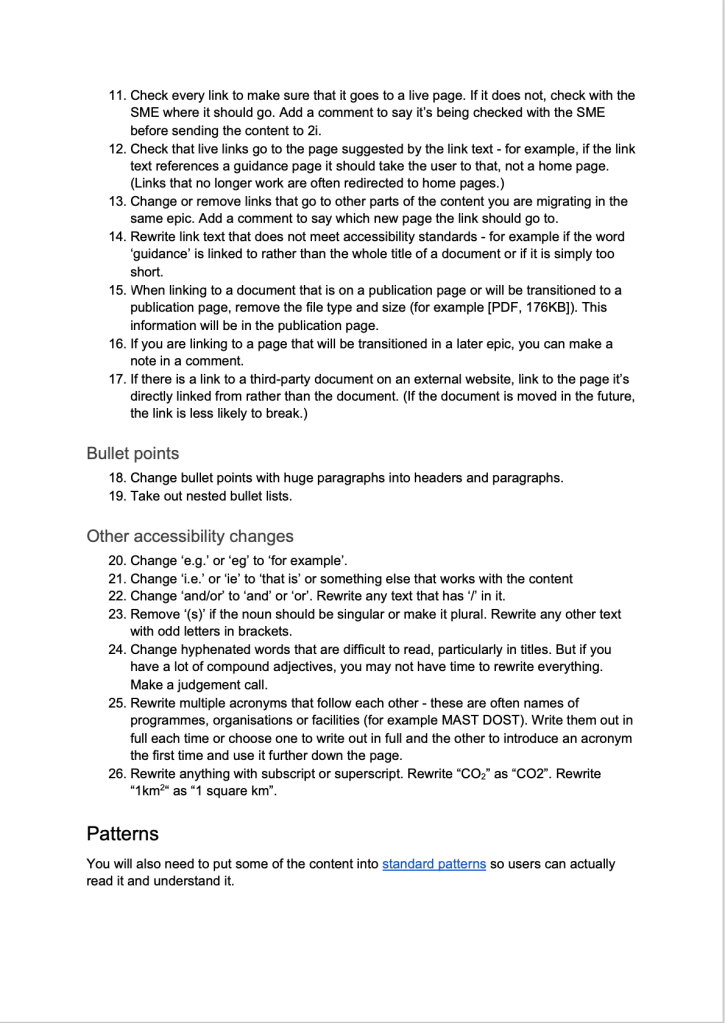
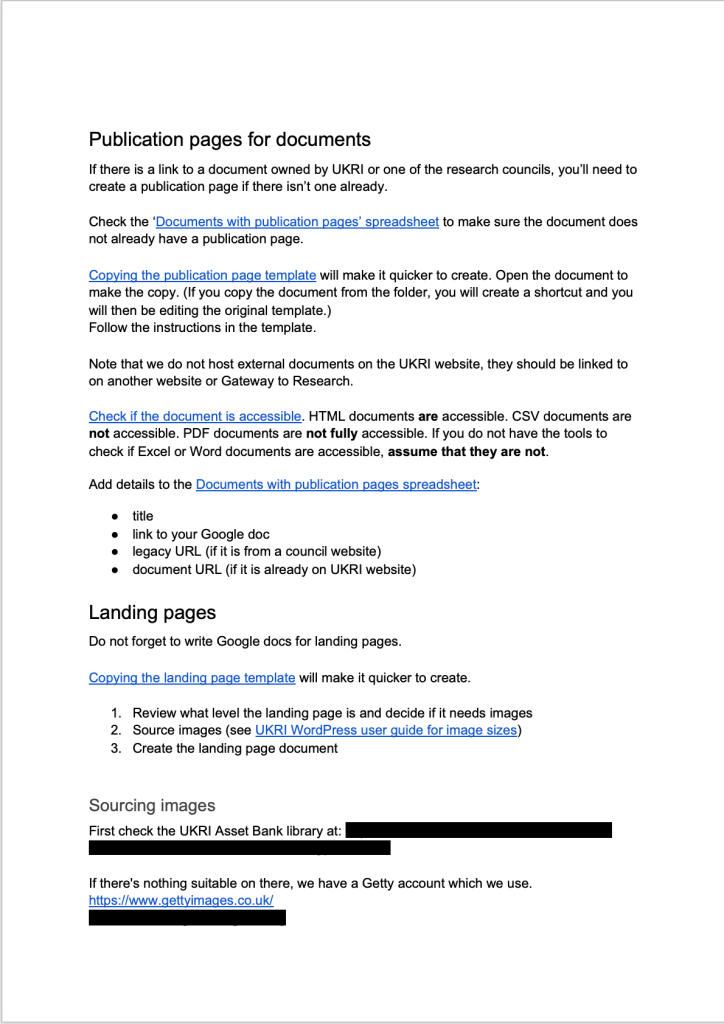
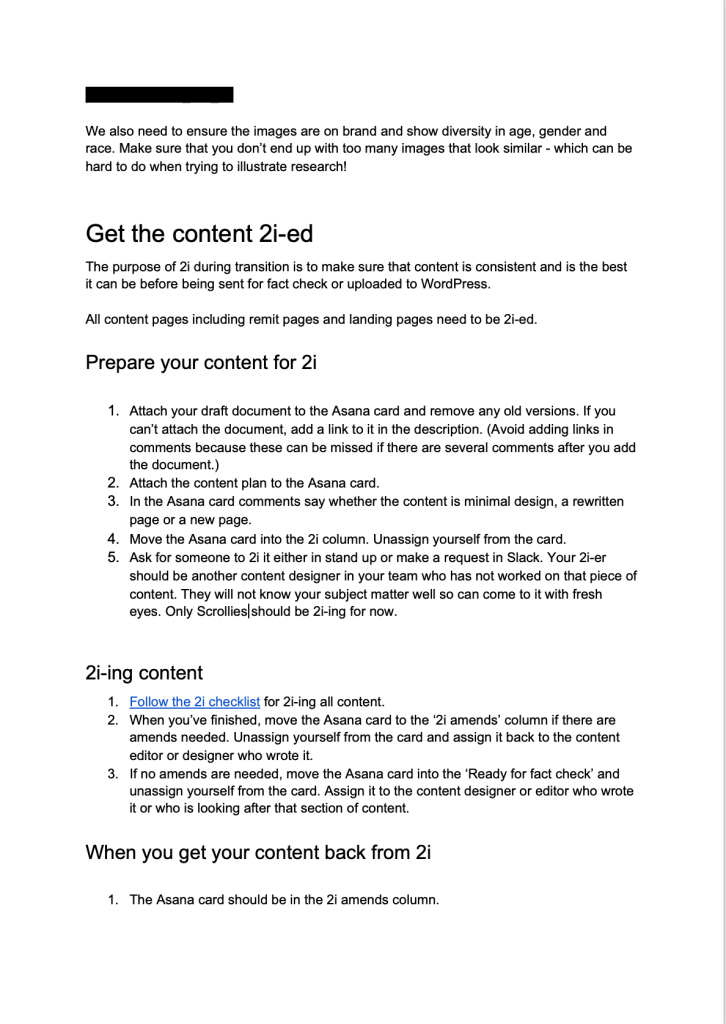
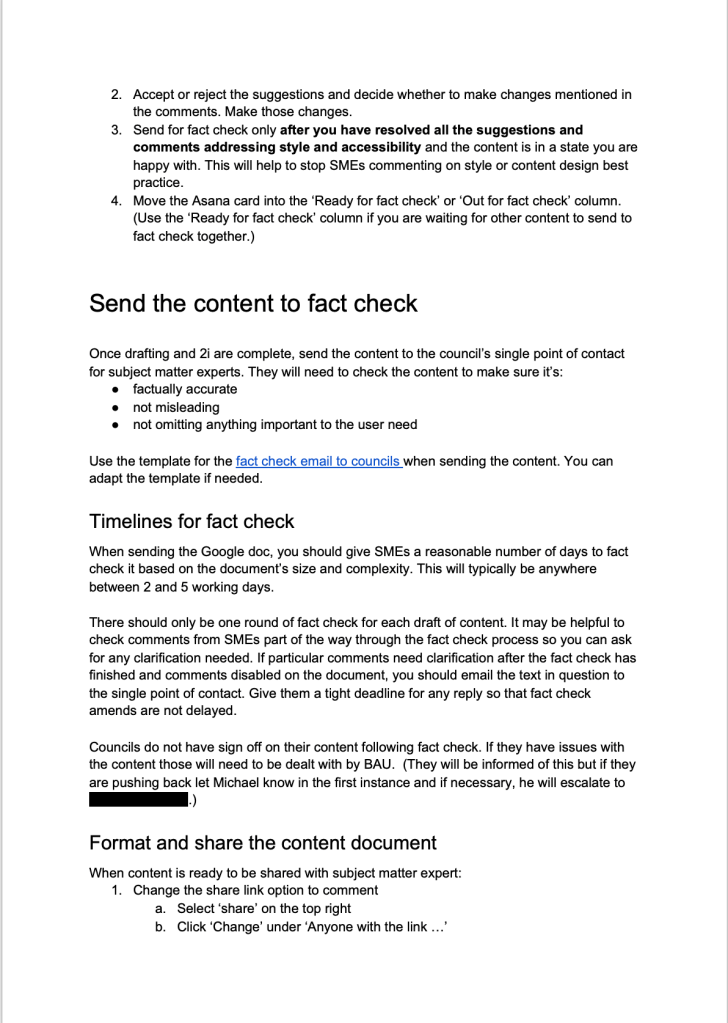
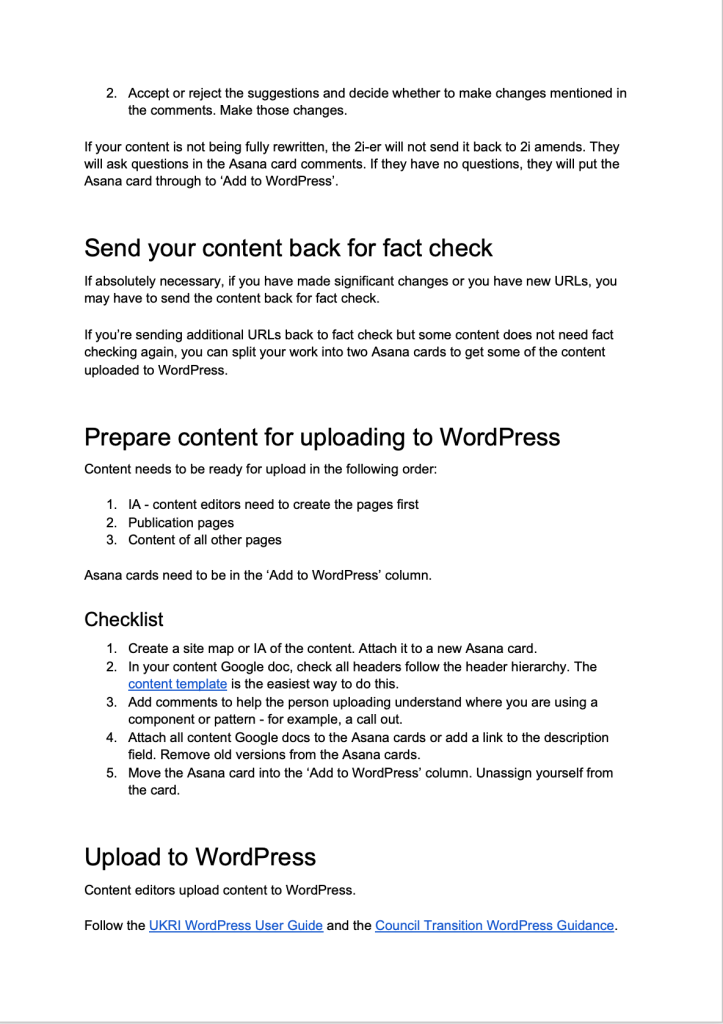
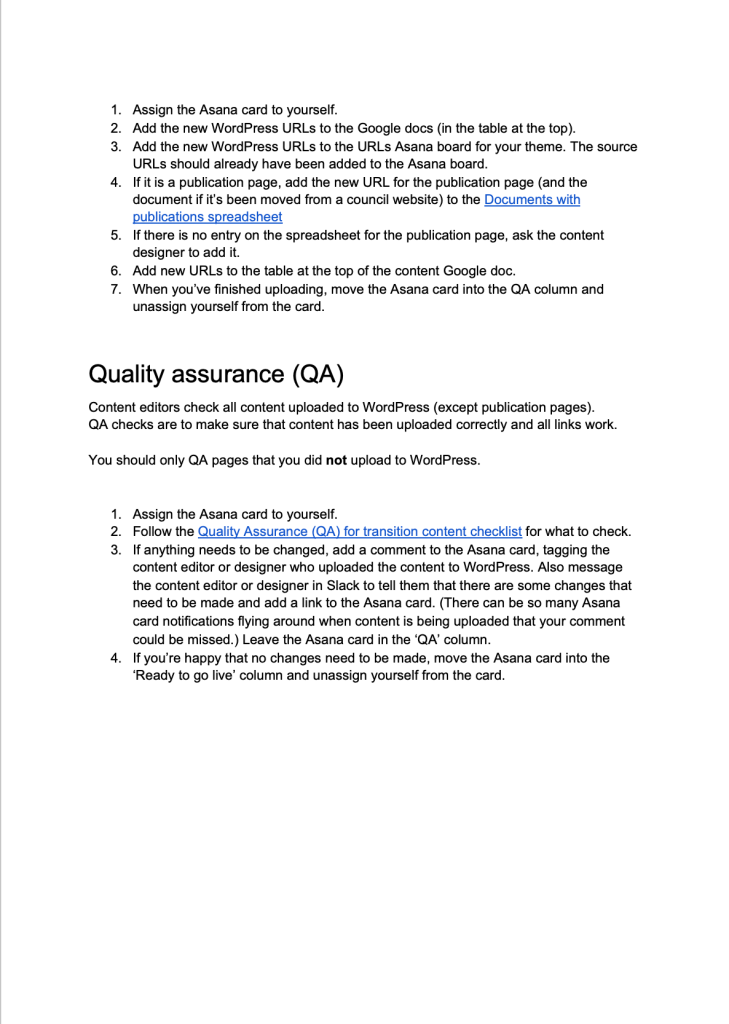
To achieve consistency between the content designers, I created processes and standards for each type of content, review standards (known as ‘2i’) and guidance about content design best practice.
I produced documents for all these processes and standards for the content designers and content editors to refer to.





Templates to ensure consistency
I also created templates for each page type. This was to make sure that the content editors (who were uploading the content to the CMS) had all the pieces of information they needed. We also needed to capture all the meta data.
Content designers already knew that they needed to include a title and meta description. The purpose of the template was to make it easier and quicker for them to do.


 Nicola Albon